
Work with Therin Slayton, PsyD
LGBTQ+ & Neurodivergent-Affirming Psychologist in Chicago & Illinois
Online therapy for LGBTQ+, trans, nonbinary and neurodivergent adults navigating ADHD, autism, masking, burnout, anxiety, trauma, gender identity and relationships—and looking for a space where they can feel understood without having to explain or change who they are.

Howdy! I’m Therin (they/them)
I’m really glad you’re here.
I work with LGBTQ+, trans, nonbinary, gender-expansive, neurodivergent, and disabled adults, including ADHD, autistic, and AuDHD folks, navigating anxiety, trauma, masking, burnout, identity, and relationships.
You don’t need to have everything figured out before you start. You don’t have to show up with a neat list of goals, a diagnosis, or even the right words. We can start right where you are.
If you're tired of shrinking, masking, or over-explaining just to get through the day, I see you.
As a genderqueer, neurodivergent, and disabled psychologist, I understand what it's like to move through a world that wasn't built with you in mind. That's why I strive to create a space where you don't have to mask, educate, or justify who you are before we can focus on what brought you to therapy.
Maybe you've spent years wondering why things that seem manageable for other people take so much energy from you.
Maybe you're exhausted from masking, pushing through sensory overwhelm, trying to keep up with expectations, or holding it together until you finally get somewhere safe enough to fall apart.
Maybe you're exploring your gender identity, healing from trauma, experiencing neurodivergent burnout, struggling in your relationships, or simply trying to understand yourself with more compassion.
Many of my clients have spent years feeling like they're "too much," "too sensitive," "too intense," or somehow doing life wrong. After hearing those messages enough times, it can become difficult to separate other people's expectations from what you actually need.
Therapy with me isn't about teaching you to become better at fitting yourself into those expectations.
It's about understanding what has shaped you, learning what your brain and body need, and building more trust in yourself.
Together, we'll work toward a life that honors your nervous system, your identity, your relationships, and the person you already are, not the person the world expects you to become.
Meet Therin
Who I Help
You might recognize yourself in some of these experiences...
LGBTQIA2S+ Adults & Young Adults
Especially trans, nonbinary, gender-expansive, and questioning people who want a therapist who understands that your identity matters, but doesn't assume it has to be the reason you're coming to therapy.
Neurodivergent Adults (ADHD, Autistic & AuDHD)
Whether you've known you're neurodivergent for years, were diagnosed later in life, or are just beginning to understand yourself through this lens, therapy can help with masking, executive dysfunction, sensory overwhelm, burnout, anxiety, and finding ways to work with your brain rather than against it.
Disabled & Chronically Ill Adults
Living in a body that has different needs can affect far more than your physical health. Therapy can be a place to talk openly about accessibility, relationships, identity, grief, frustration, boundaries, or the impact of ableism without having your experience minimized.
Polyamorous, CNM & Nontraditional Relationships
Whether you're navigating polyamory or consensual non-monogamy, relationship transitions, communication, jealousy, boundaries, or simply building relationships that don't follow traditional expectations, you deserve a space where your relationships are understood rather than judged.
Creatives, Deep Thinkers & People Who've Always Felt Different
Maybe you've always felt a little outside the expected mold. You think deeply, notice things other people seem to miss, feel intensely, or have spent years wondering why the ways you're expected to live, work, or connect don't quite fit you.
You don't need to fit neatly into one of these categories to work with me. Many of my clients come to therapy with experiences and identities that overlap, change, or don't fit easily into a box.
If you're looking for a therapist who will be curious about who you are rather than make assumptions about who you're supposed to be, you're welcome here.
What Therapy Feels Like With Me
Clients describe therapy with me as collaborative and deeply human. We move at a pace that respects your nervous system, your energy, and your lived experience. You don't have to arrive knowing exactly what you want to work on or having the "right" words for what you're experiencing.
You Get to Show Up as You Are
You don't have to make yourself easier to understand in therapy. If you need time to process a question, lose your train of thought, communicate differently, need something explained another way, or aren't sure how to put an experience into words, that's okay. We'll work together to find a rhythm that feels comfortable and useful for you.
Trauma-Informed & Neurodivergent-Affirming
I don't approach therapy from the assumption that every difficult thought, behavior, or coping strategy needs to be "fixed." Sometimes the ways you've learned to cope helped you survive experiences, environments, or expectations that were genuinely difficult.
We'll get curious about what's still serving you, what's exhausting you now, and what might help you feel safer, more supported, and more like yourself.
Therapy Is Something We Do Together
You know your life and lived experience better than anyone. My role isn't to tell you who you should become. We'll work together to understand what's happening, identify what matters to you, and find approaches that actually fit your brain, body, relationships, and life.
Over time, therapy may help you:
Untangle anxious, self-critical, or spiraling thoughts
Recognize your needs before you reach complete exhaustion
Understand how masking, expectations, trauma, or past experiences still affect you
Build more trust in your needs, boundaries, and inner voice
Find strategies for overwhelm and executive dysfunction that work with your brain
Strengthen relationships without losing yourself in them
Reconnect with creativity, rest, joy, and what gives your life meaning
You don't have to become a different version of yourself for therapy to be helpful. We can start by understanding the person who's already here.
Building a Life That Actually Fits You
You may have spent years learning how to function in environments, relationships, or routines that don't always work for your brain, body, or identity. Therapy can help you understand what's wearing you down, what you need, and what could make everyday life feel more manageable and sustainable.
When Masking Leaves You Exhausted
Maybe you can get through work, school, relationships, or social situations, but doing it takes more out of you than anyone realizes. We'll explore where you're masking, what it's costing you, and where it may feel safer to let some of that performance go.
When Your Brain Doesn't Cooperate With the Plan
ADHD, executive dysfunction, sensory overwhelm, task initiation, transitions, organization, and everyday responsibilities can become frustrating when the strategies you've been given weren't designed for the way your brain works.
We'll look for practical strategies, accommodations, and ways of structuring your life that work more naturally with your needs, rather than asking you to just try harder.
When You're Exploring Gender or Navigating Dysphoria
You may know exactly who you are, be questioning, or still be figuring out what certain feelings mean. There isn't a particular conclusion you're expected to reach.
Therapy can give you space to explore gender identity, dysphoria, relationships, coming out, transition-related decisions, or simply what feels most authentic to you—with curiosity rather than judgment.
When Years of Feeling "Too Much" Have Changed How You See Yourself
Being misunderstood, criticized, excluded, or repeatedly told that you're too sensitive, intense, difficult, lazy, or different can eventually shape the way you see yourself.
Together, we can begin separating those messages from who you actually are and make more room for self-compassion, trust, and acceptance.
When Past Experiences Still Affect How Safe You Feel Today
Trauma doesn't always stay in the past. You may notice it in the way you brace for conflict, second-guess yourself, shut down when you're overwhelmed, struggle to trust other people, or feel like you always need to be prepared for something to go wrong.
Rather than judging the ways you learned to cope, we'll get curious about what helped you survive then, what you need now, and what might help you feel safer today.
When You're Burned Out and Running on Empty
Burnout doesn't always look like completely falling apart. You may still be working, caring for people, answering messages, and getting through your responsibilities while feeling increasingly exhausted or disconnected underneath it all.
We'll look at what's draining you and what sustainable rest, boundaries, support, and recovery could actually look like in your life.
The goal isn't to make you better at pushing through. It's to help you understand what you need so you can build a life that asks less of you to pretend, perform, or constantly recover from simply getting through the day.

Areas I Commonly Support
Every person's experience is different, but many of the adults and young adults I work with come to therapy for support with:
ADHD, autism, AuDHD, and neurodivergent burnout
Autistic masking, chronic masking, and the exhaustion that can come with hiding parts of yourself
Executive dysfunction, sensory overwhelm, and difficulty managing everyday demands
Anxiety, overthinking, chronic stress, and nervous system overwhelm
Gender identity exploration, gender dysphoria, and transgender, nonbinary, and gender-expansive experiences
Trauma, complex trauma, and survival-mode coping patterns
Polyamory, consensual non-monogamy (CNM), and nontraditional relationship dynamics
Disability, chronic illness, accessibility, and the emotional impact of ableism
Low self-worth, perfectionism, internalized shame, and self-criticism
Relationship challenges, communication, boundaries, and feeling misunderstood by others
Reconnecting with creativity, authenticity, rest, joy, and self-trust
You don't need to know exactly what you want to work on before starting therapy. You may simply know that something isn't working anymore, or that you're tired of working so hard just to feel okay.
We'll start with what's happening in your life now, make sense of what's been weighing on you, and figure out together what you want to feel different.

Why I Do This Work
I know what it's like to feel out of place in spaces where fitting in seems to come more easily to everyone else.
Growing up in the Great Plains, I learned early how complicated it can be to exist outside the "straight and narrow." Those experiences shaped the kind of psychologist I wanted to become and the kind of therapy space I wanted to create for other people who have spent parts of their lives feeling different, misunderstood, or overlooked.
I pursued my doctorate in clinical psychology because strong clinical training matters to me. But just as important is creating a relationship where you feel respected, believed, and genuinely known as a person.
That's at the heart of why I do this work: helping people understand themselves more deeply, trust what they need, and create lives that feel like their own.
Education, Training & Supervision
Education
Doctor of Psychology (PsyD), Clinical Psychology — Adler University
Master of Arts (MA), Clinical Psychology — Adler University
Bachelor of Arts (BA), Psychology — Emporia State University
Clinical Training
Doctoral internship in college counseling supporting university students
Advanced training in trauma-informed, identity-affirming, and culturally responsive therapy
Clinical experience in community mental health settings, including crisis intervention
Clinical experience supporting ADHD, autistic adults, LGBTQIA+, gender-diverse, and neurodivergent adults navigating anxiety, trauma, identity exploration, burnout, and life transitions
Licensure Status
Therin Slayton, PsyD, is a Licensed Clinical Psychologist in Illinois and provides online therapy to adults and young adults throughout the state.
At Mindful Healing Counseling, Dr. Slayton provides LGBTQIA+ and neurodivergent-affirming care for clients navigating anxiety, trauma, identity, relationships, burnout, and other life challenges.
Common Questions
-
Neurodivergent-affirming therapy is an approach that respects differences in how your brain processes, communicates, focuses, feels, and experiences the world rather than treating those differences as something that automatically needs to be fixed.
For ADHD, autistic, AuDHD, and other neurodivergent adults, that may mean looking at executive dysfunction, sensory needs, masking, burnout, relationships, anxiety, or everyday stress through a lens that considers how your brain actually works.
In our work together, the goal isn't to make you appear more neurotypical. We'll get curious about what's making life harder, identify what you need, and find strategies and accommodations that feel realistic and sustainable for you.
-
No. You don't need a formal ADHD or autism diagnosis to work with me or to benefit from neurodivergent-affirming therapy.
You may have been diagnosed years ago, received a diagnosis as an adult, identify as self-diagnosed, be wondering whether you're neurodivergent, or simply recognize yourself in experiences like masking, sensory overwhelm, executive dysfunction, burnout, or feeling different from the people around you.
You don't need to prove that you're "neurodivergent enough" to deserve support. We can start with what you're experiencing and what would make life feel more manageable.
-
Neurodivergent burnout can feel like deep physical, mental, and emotional exhaustion after spending a long time coping with demands that exceed your capacity. You might notice that things you normally manage are suddenly much harder, you need more recovery time, your sensory tolerance is lower, or you have less energy for work, relationships, communication, or everyday tasks.
For some people, years of masking, sensory overload, executive-function demands, chronic stress, or pushing through without enough support can contribute to burnout.
Burnout can look different from person to person, and exhaustion can have many causes. Therapy can help us slow down, understand what's contributing to what you're experiencing, and explore what support, boundaries, accommodations, or changes might help.
-
Yes. Therapy can help you understand when and why you mask, how masking affects you, and what it might look like to rely on it less when it feels safe and supportive to do so.
Maybe you've learned to rehearse conversations, hide sensory discomfort, suppress stimming, force yourself through social situations, imitate what seems expected, or work incredibly hard to appear like you're managing even when you're overwhelmed.
We don't have to treat masking as something you simply need to stop doing. Sometimes masking has helped you feel safer, maintain relationships, succeed at work or school, or navigate environments that weren't very accepting of difference. Instead, we can get curious about what it's costing you and where you might have more room to be yourself.
-
Absolutely. You don't have to come to LGBTQ+ affirming therapy because you want to talk about your gender or sexuality.
You might want help with anxiety, trauma, burnout, work stress, grief, family, relationships, neurodivergence, or something else entirely. Your LGBTQIA+ identity can simply be one part of who you are, not the problem we're trying to solve.
Sometimes it just feels easier to talk about everything else when you know you won't have to wonder whether your therapist will understand, judge, or make assumptions about an important part of your life.
-
Yes. Therapy can give you a supportive place to explore your gender identity without requiring you to already know how you identify or where that exploration will lead.
You might be wondering whether you're transgender, nonbinary, gender-expansive, or whether any particular label fits you at all. You may also be sorting through gender dysphoria, gender euphoria, relationships, family reactions, coming out, or decisions about social or medical transition.
There isn't a particular identity or outcome you're expected to reach in therapy with me. We can make room for questions, uncertainty, curiosity, and whatever you discover along the way.
-
Yes. I work with people in polyamorous, consensually non-monogamous (CNM), and other nontraditional relationship structures.
You might come to therapy to work through communication, jealousy, boundaries, attachment, relationship transitions, conflict, or balancing the needs of multiple relationships. Or your relationship structure may have very little to do with why you're seeking therapy.
Either way, you won't need to defend or justify the way your relationships are structured. We can focus on what's actually happening in your relationships and what you want to feel different.
-
If you've felt misunderstood, judged, dismissed, or pressured to be someone you're not in therapy before, it makes sense that trying again might feel difficult.
Maybe a previous therapist didn't understand neurodivergence or LGBTQIA+ identities. Maybe you felt like you had to educate them, your concerns were minimized, or the strategies they suggested simply didn't work for the way your brain or body works.
You can tell me what didn't work before. In fact, that information can help us understand what you need from therapy now. We can talk openly about what helps you feel comfortable, what doesn't, and how we can make our work together feel more collaborative and useful.
-
Online therapy allows you to meet with your therapist from a private space in Illinois, which some ADHD, autistic, and other neurodivergent adults find more comfortable than traveling to an office.
Being in your own environment may mean having access to familiar sensory supports, comfortable clothing, fidgets, pets, preferred seating, or whatever helps you feel more regulated and able to engage. It also removes the travel and transition involved in getting to and from an office.
Online therapy isn't automatically the best fit for everyone, but for many neurodivergent adults, the flexibility and familiarity of meeting from their own space can make therapy feel more accessible.
-
Yes. Mindful Healing Counseling is in network with Blue Cross Blue Shield PPO, including Blue Choice PPO, and Aetna PPO plans for eligible therapy services in Illinois.
We also offer private-pay options and can provide information about using out-of-network benefits when applicable. Because benefits and out-of-pocket costs vary by individual insurance plan, our team can verify your benefits before you begin and help you understand your expected costs.
If you're unsure what your plan covers, you don't have to figure it out on your own. Our team can help you understand your options before scheduling.
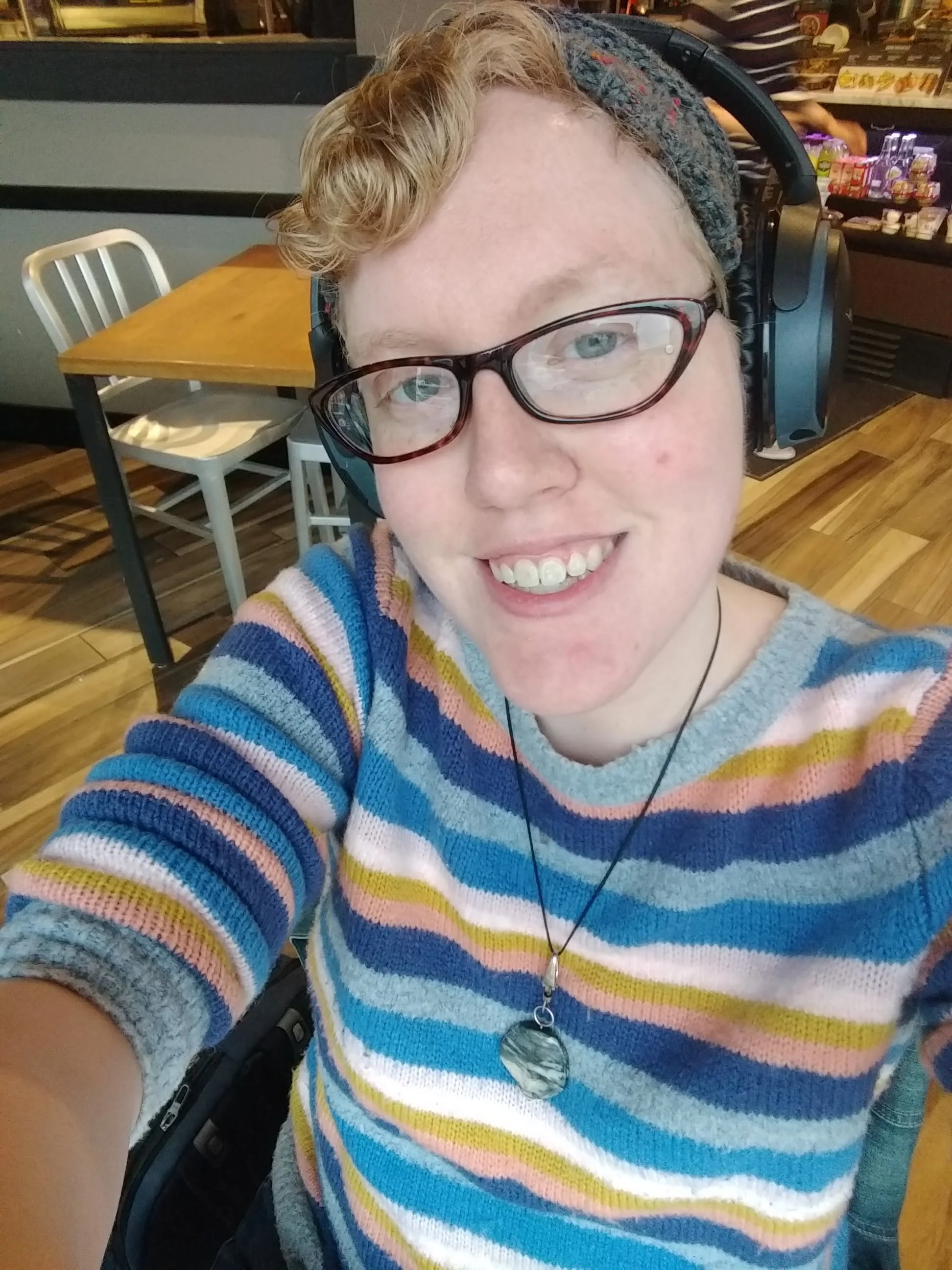
A Few Things That Bring Me Joy
When I’m not doing therapy, you’ll probably find me playing video games with my chosen family, falling down a Wikipedia rabbit hole, discovering new music, hanging out with my calico cat, Chex, experimenting with baking or needle felting, getting outside to enjoy nature, or losing track of time in a tabletop role-playing game.
I value curiosity, creativity, connection, play, and rest, not just in my own life, but as meaningful parts of being human.
LGBTQ+ & Neurodivergent-Affirming Online Therapy Across Illinois
I provide online therapy throughout Illinois, making affirming care accessible whether you live in Chicago, attend college away from home, or live in a smaller community where finding an LGBTQ+ or neurodivergent-affirming psychologist nearby may be difficult.
I frequently work with clients in communities including:
Chicago: Andersonville, Northalsted (Boystown), Rogers Park, Logan Square, Uptown, and other neighborhoods throughout the city.
College & University Communities: I work with college students and young adults throughout Illinois, including students attending Northwestern, UIUC, NIU, the University of Chicago, DePaul, Loyola and other Illinois colleges and universities.
Chicago Suburbs & Communities Across Illinois: Evanston, Oak Park, DeKalb, Champaign-Urbana, and surrounding communities.
Small Towns & Rural Illinois: Drawing from my Great Plains roots, I'm especially passionate about making affirming therapy more accessible to people who may have fewer LGBTQ+ and neurodivergent-affirming providers in their local communities.
Because therapy is online, you don't have to live near Chicago, or near an affirming provider, to work with me. As long as you're located in Illinois at the time of your session, we can meet from a private space that works for you.
Insurance & Getting Started
Mindful Healing Counseling is in network with Blue Cross Blue Shield PPO and Aetna PPO. We also accept private pay, out-of-network benefits, and offer a limited number of sliding-scale appointments.
Before your first appointment, our team will verify your insurance benefits and answer any questions you have about coverage, costs, or getting started, so you can begin therapy with confidence.
Ready to Get Started?
You don't have to know exactly what you need from therapy before you reach out. If you're looking for a space where you can show up without masking, over-explaining, or wondering whether an important part of you will be understood, I’d be honored to work with you.
Directly serving the LGBTQ+ and Neurodivergent communities in Chicago and throughout Illinois.